
- Early Access
Castle Guardian
Mixed-reality roguelike castle defense. Goblins climb your furniture; you fight back with spells cast from your hands.
My own game engine, written from scratch in Rust on Vulkan and OpenXR — built for one thing: mixed-reality games that feel native on Meta Quest. Castle Guardian and Room Bloom both run on it.
That's Castle Guardian on a Meta Quest 3, recorded in the headset: tap the icon, and about two seconds later the game is in your room and ready to play.
Fast startup is a top priority in the engine. The first frame only waits for what it truly needs — the OpenXR and Vulkan session, a small boot scene and an indexed content pack. Everything else, from room data to lighting, loads after you're already in. Adding content doesn't slow the launch down.
The engine builds a mesh of your room from the headset's depth sensing while you play — no room scan before you start. Games get real surfaces to stand on and collide with: in Castle Guardian, goblins walk around your furniture and climb onto your tables.
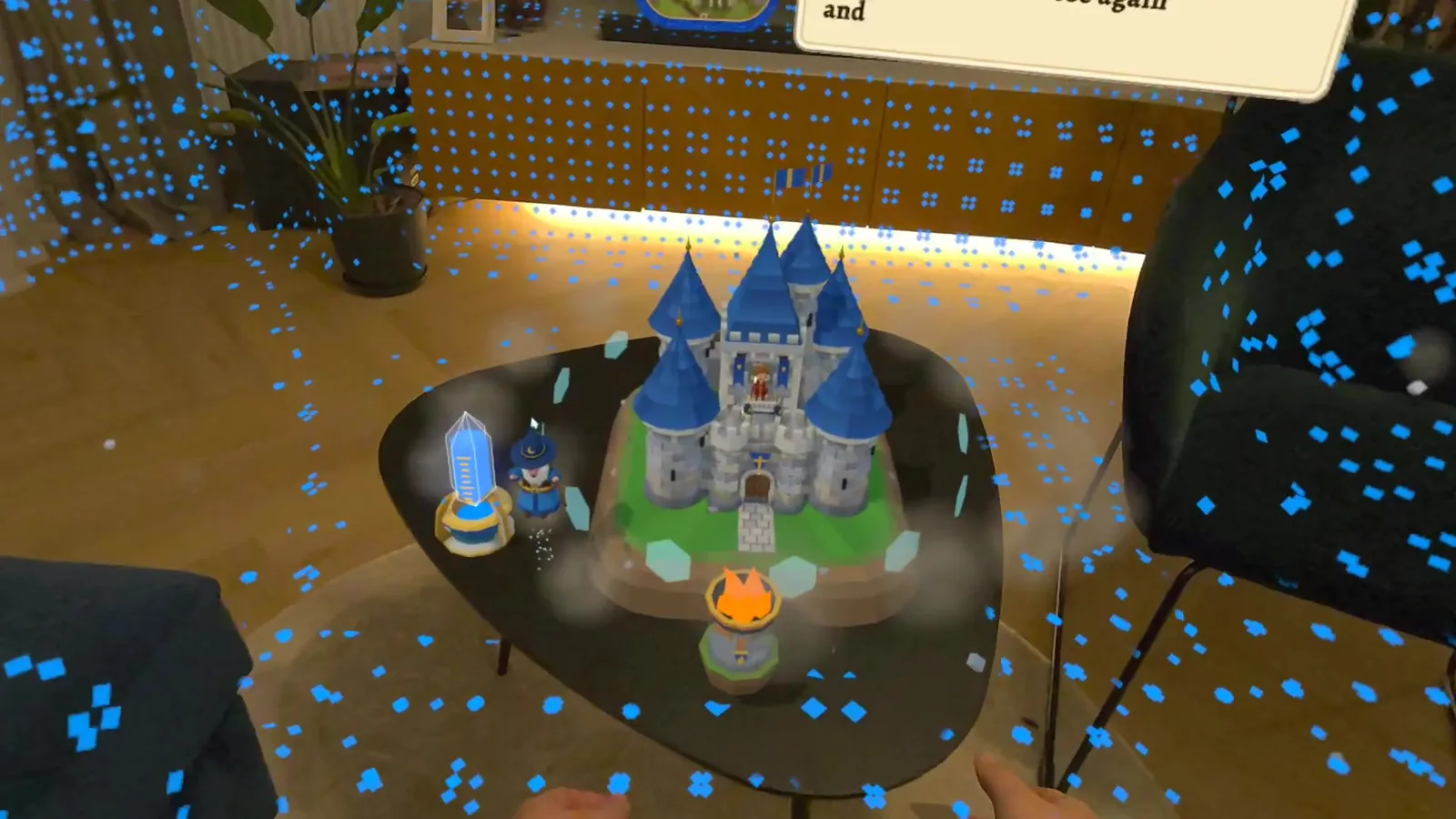
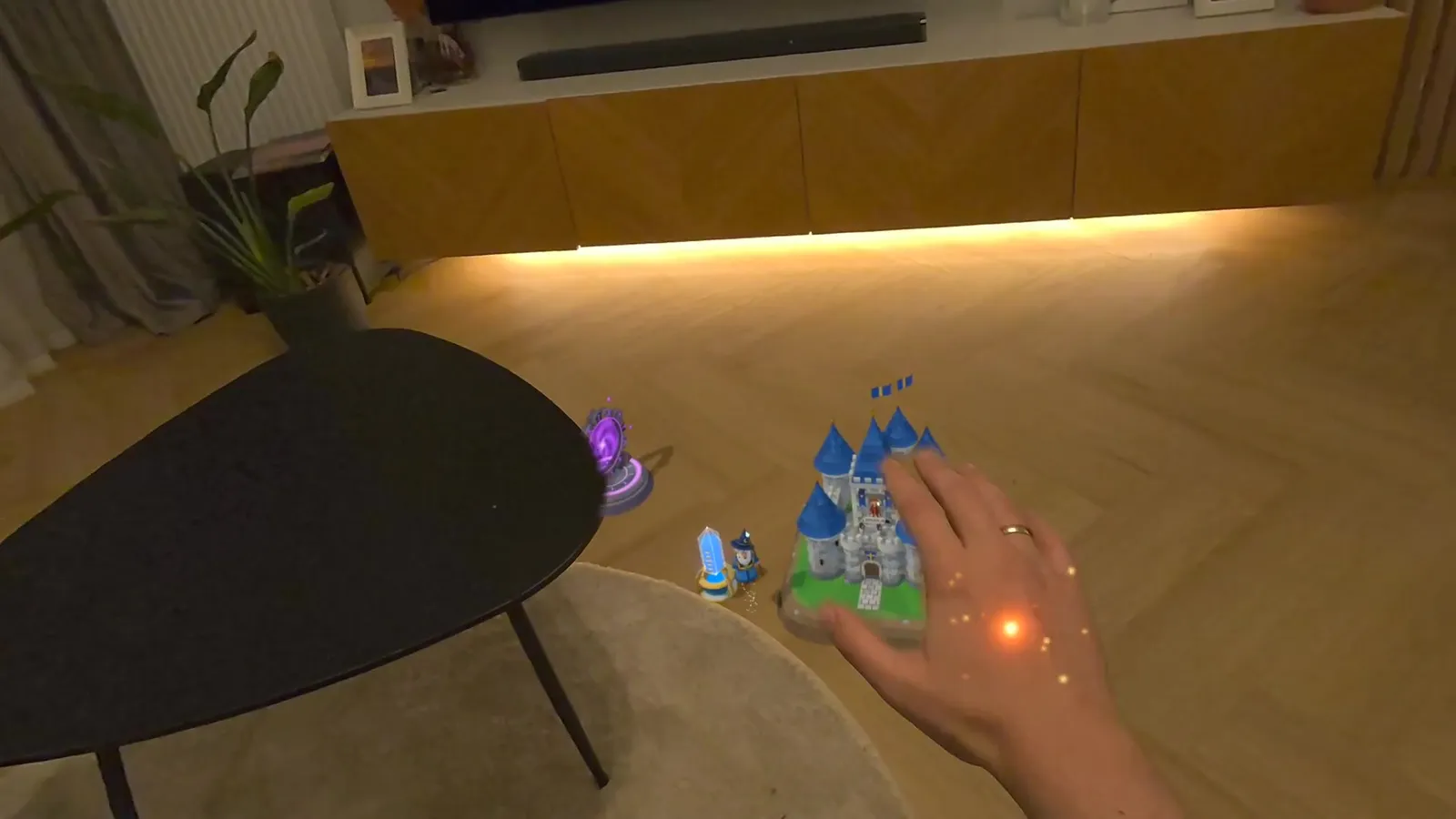
Virtual objects sit in your room, not on top of it. Using the headset's depth, real objects and your own hands hide whatever is behind them — so a castle can disappear behind a sofa, and your hand can cover it.
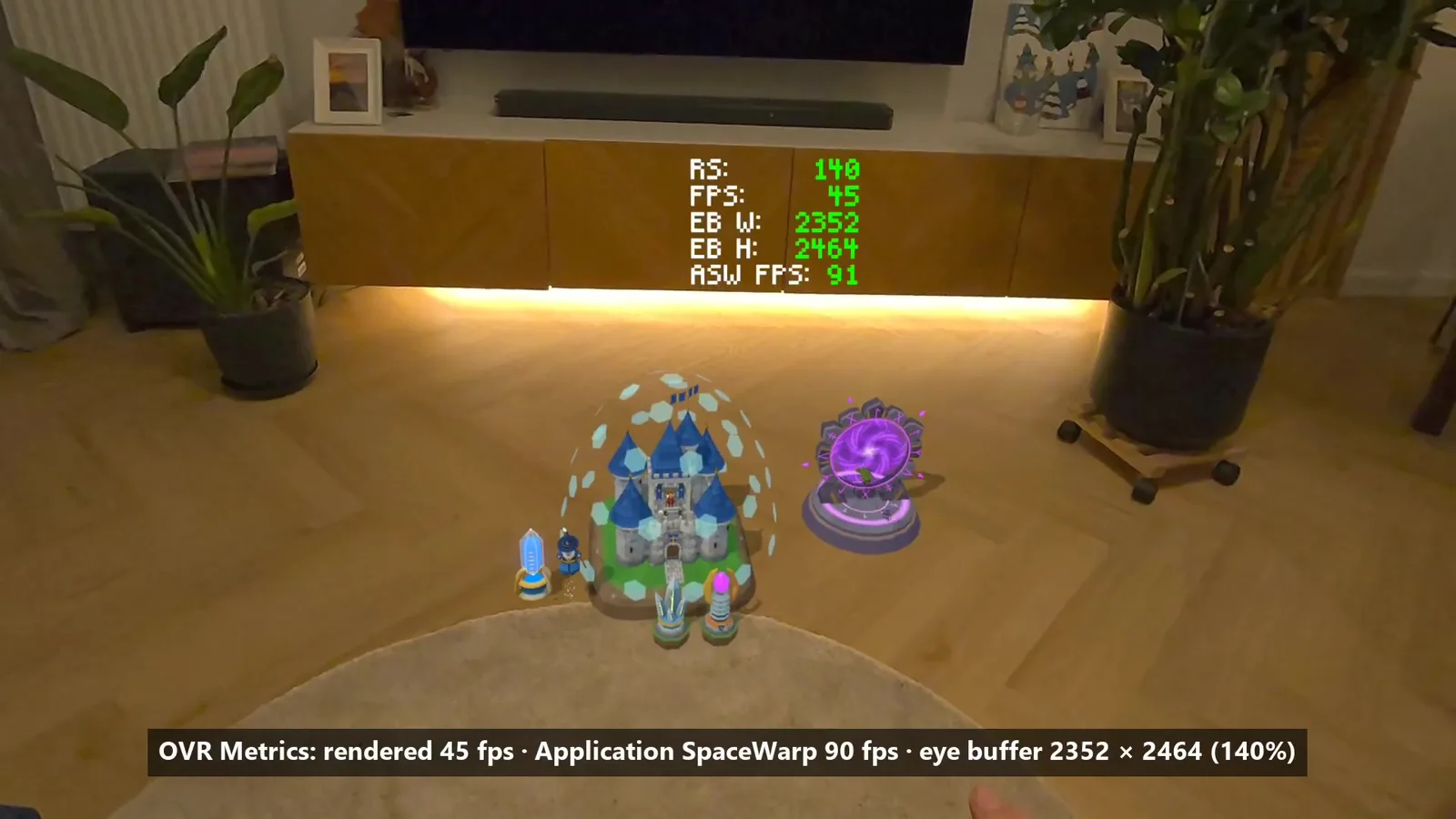
Rendering is built around what Quest hardware is good at: both eyes drawn in one pass with stereo multiview, foveated rendering that spends fewer pixels at the edges of your view, and Application SpaceWarp to turn every rendered frame into two.
In this shot, Castle Guardian renders at 45 fps, SpaceWarp brings it to 90 fps on screen, and the eye buffer runs at 140% resolution — sharper than the headset's default.
Quest foveation with static and dynamic profiles, so GPU time goes where it matters.
Hand tracking and microgestures, with controllers as an option.
Content that stays exactly where you left it in your room.
Menus and panels live in the room, never stuck to your head.
Host-authoritative networking with Meta sign-in.
Engine in Rust; gameplay in Luau scripts that reload live — with my own in-headset, AI-assisted editing tools on top.
Castle Guardian and Room Bloom are out in Early Access. Relaxing Places, Drumfall and Crownroads are next.
Mixed-reality roguelike castle defense. Goblins climb your furniture; you fight back with spells cast from your hands.

Four atmospheric mixed-reality scenes whose effects respond to your walls, floors and furniture.

Walkable VR landscapes with spatial sound and adjustable weather. Seven places, coming soon to Meta Quest.
Project updates
Occasional dev updates on engine milestones, mixed-reality tech, and games built on it.
I build engines and games for Meta Quest, and I'm available for remote work and consultations.